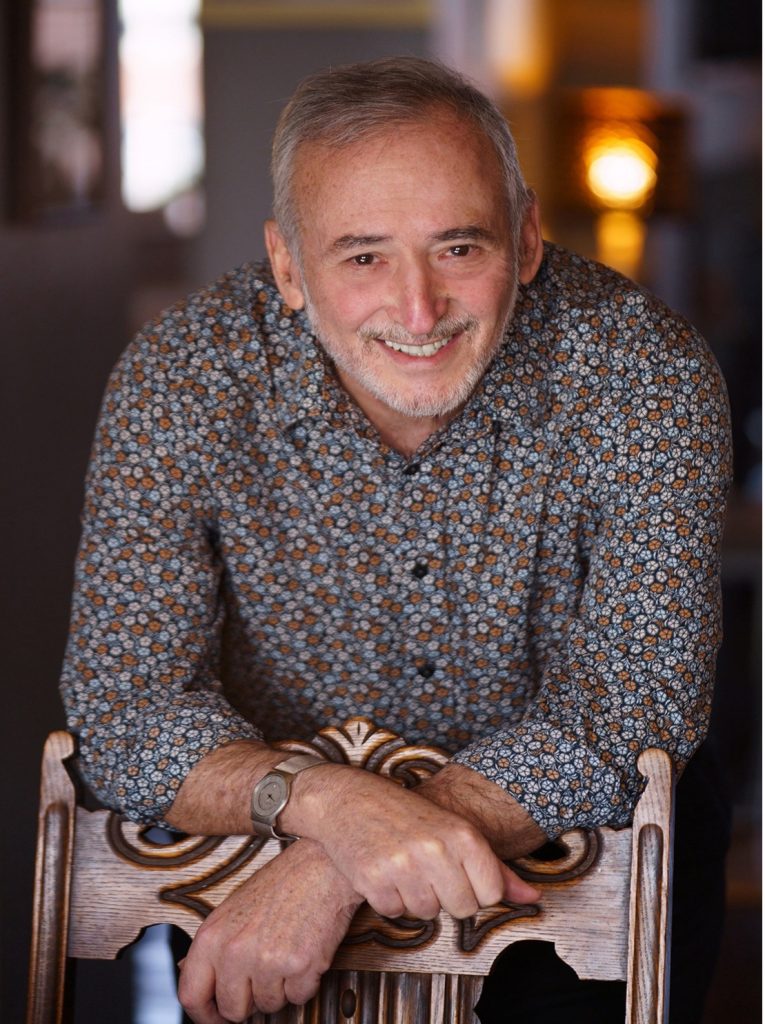
David Pincus, DMH — Doctor of Mental Health
David Pincus has spent more than forty years working at the intersection of the mind and brain — and what is unusual about that is not only the breadth of his training, but that the integration of disciplines is the actual substance of what he does, in all three registers: in his scholarship and writing, in his teaching and presentations, and in direct clinical work with patients and consultees. In each of these, he draws on psychiatry, psychoanalysis, neuroscience, developmental theory, and philosophy — not as separate tools to be selected from, but as a single, unified way of understanding what a person is and what they need.
The training that made this possible was itself unusual. The Doctor of Mental Health program — at UC Berkeley, UCSF, and Langley Porter Neuropsychiatric Institute — was the first program of its kind in the country. Over five years, running simultaneously, it combined coursework in the medical school oriented to the practice of mental health, a full psychiatric residency at Langley Porter, and rigorous training in psychoanalysis throughout. Concurrently, Dr. Pincus pursued graduate study in the neurosciences at Stanford. The result was not a clinician who later read widely, but one trained from the outset to hold all of these frameworks at once.
His specialty year — an internship in mother-infant attachment and early child development — was conducted under some of the most distinguished figures the field has produced: Mary Main, whose work on adult attachment representation transformed the field; Alicia Lieberman, one of the foremost clinicians of infant mental health; and Selma Fraiberg, whose concept of “ghosts in the nursery” remains foundational to how practitioners understand the transmission of early experience. His training in psychoanalysis included training and consultation with Erik Erikson, whose writing on human development across the full life cycle has shaped how Dr. Pincus thinks about every patient he sees. More broadly, his intellectual development was shaped through study and collaboration with a remarkable generation of thinkers: Karl Pribram, Walter Freeman, and Jaak Panksepp in neuroscience, and numerous others whose work defined the landscape he has spent his career navigating.
Over the decades that followed, Dr. Pincus worked across the full range of clinical and institutional settings. He directed the Outpatient Psychiatry program at St. Vincent Charity Hospital in Cleveland. He served for five years as a neutral consultant to the Federal District Court for the Northern District of Ohio — appointed by judges to clarify the most complex neuropsychiatric and medical cases before an adversarial court system, with the authority to commission any assessment or expert consultation needed to illuminate the clinical picture.
From 2005 to 2010, he served as Administrative, Conceptual, and Clinical Director of the MindBrain Consortium at Summa Hospitals — a funded research and training program at the interface of neuroscience, psychiatry, and psychotherapy, within the department of psychiatry. Studies conducted under his direction included fMRI measures of oxytocin and depression in collaboration with the Medical University of South Carolina, intranasal oxytocin and affective experience, a study of oxytocin with professional couples examining intimacy, low dose opioids in the treatment of acute depression, and low dose naltrexone in multiple sclerosis patients. Dr. Pincus is primary author on the oxytocin research.
For twelve years he directed Visions of Mind and Brain, a cross-disciplinary forum that brought together leading figures from psychiatry, psychoanalysis, neuroscience, philosophy, linguistics, and artificial intelligence to examine the relationship between mental and neural life.
He currently holds adjunct faculty positions at University Hospitals of Cleveland and Case Western Reserve University, and serves as Assistant Editor of the journal Psychoanalytic Psychology. He is a published author for more than thirty years, writing articles and chapters integrating neuroscience and the mind. His current scholarly work addresses consciousness, episodic memory, and a book on amnesia. His work with clients inform his writing and vice versa.
He sees a small number of clients, works without insurance billing, and client confidentiality is of the highest importance. When it seems relevant and he has permission from his client, he consults with professionals and others as necessary. He has been in his own analysis and understands from the inside what it means to be a patient.
Before there were therapists, there were mentors, teachers, confidants, and guides. What makes any of those relationships valuable is the quality of attention brought to it. That is what Dr. Pincus offers — careful, unhurried, deeply informed attention to whoever is sitting across from him.